The Perfect 2026 Morning Skincare Routine: Every Step, Explained for Radiant All-Day Skin
The Perfect 2026 Morning Skincare Routine: Every Step, Explained for Radiant All-Day Skin
Your skin faces a battlefield every morning. UV radiation, pollution, free radicals, and blue light from screens are all waiting the moment you step outside — or even sit by a window. The right morning skincare routine isn't just about looking good; it's about actively protecting your skin's long-term health while giving you a luminous, prepped canvas before you even think about makeup.
In this guide, we're breaking down every single step of the ideal 2026 morning skincare routine — what to use, why it works, the exact order to apply it, and the mistakes that could be quietly sabotaging your results without you even realizing it.
Why Your Morning Routine Works Differently Than Your Nighttime Routine
Before we dive into the steps, it helps to understand why morning and evening routines serve completely different purposes — because mixing them up is one of the most common and costly skincare mistakes people make.
Your nighttime routine is about repair and restoration. While you sleep, your skin enters its natural regeneration cycle, making it the ideal time to use potent actives like retinol, stronger exfoliating acids, and rich repair treatments.
Your morning routine, by contrast, is entirely about protection and preparation. Your job in the AM is to shield your freshly repaired skin from the day's aggressors, maintain hydration through the afternoon, and create the perfect base for anything you apply on top. This is why SPF is non-negotiable in the morning, and why you want to be lighter-handed with actives that increase your skin's sensitivity to sunlight.
Understanding this protection-first philosophy makes every step below click into place.
Step 1: Gentle Cleansing (Or Just Water?)
This is the step that surprises most people: you don't always need to use a cleanser in the morning.
If your skin is dry or sensitive — and especially if you're already doing a solid nighttime routine that includes cleansing before bed — a simple splash of lukewarm water can be all you need to refresh your face in the morning. Over-cleansing strips your skin's natural moisture barrier, leaving it tight, reactive, and actually more prone to breakouts.
However, if you wear heavier overnight treatments, sleep on your stomach (hello, pillowcase oils), or have oily or acne-prone skin, a gentle morning cleanser is absolutely worth using. Look for a low-pH, sulfate-free formula — something that lifts surface residue without stripping your protective barrier.
The goal here is simply a clean, balanced canvas. Not squeaky-clean, not tight — just clear and ready for what comes next.
Step 2: Toner (The Most Underrated Step in Your Routine)
Toners have had a reputation problem. For years they were associated with harsh, alcohol-laden formulas that stripped skin raw. The modern 2026 toner is nothing like that — and skipping this step could be quietly costing you results.
A quality AM toner does two important things: it rebalances your skin's pH after cleansing, which prepares it to absorb everything that follows, and if you choose well, it delivers a concentrated hit of hydrating or brightening ingredients in a lightweight, fast-absorbing form.
For your morning routine specifically, you want a hydrating toner — not an exfoliating one. Leave the AHA and BHA toners for your nighttime routine. Instead, reach for formulas featuring hyaluronic acid, niacinamide, rose water, or glycerin. These prepare the skin, add a layer of hydration, and make every subsequent product perform better.
Apply by pressing — not rubbing — a small amount into your palms and patting it gently into your skin. This technique improves absorption and avoids unnecessary friction on freshly cleansed skin.
Step 3: Vitamin C Serum (Your Most Powerful Morning Weapon)
If one product separates a good morning routine from a great one, it's vitamin C serum. And there's solid science behind the hype.
Vitamin C is an antioxidant, which means it neutralizes the free radicals generated by UV exposure, pollution, and blue light before they can trigger inflammation and collagen breakdown in your skin. Used consistently every morning, it acts as a second layer of defense beneath your SPF — and research shows that the combination of vitamin C plus sunscreen offers significantly better photoprotection than sunscreen alone.
On top of the protective benefits, vitamin C brightens the complexion over time, fades hyperpigmentation, and actively supports collagen production. It is one of the most genuinely multi-tasking ingredients in skincare.
When shopping for vitamin C, look for L-ascorbic acid — the most potent and well-studied form — at concentrations between 10% and 20%. Sensitive skin types may prefer a gentler derivative like ascorbyl glucoside or sodium ascorbyl phosphate. Vitamin C serums are also notoriously prone to oxidizing, so store yours away from light and heat, and replace it if the formula turns deep orange or brown.
Apply a few drops after your toner, press gently into the skin, and allow 60 to 90 seconds of absorption time before layering your next product.
Step 4: Eye Cream
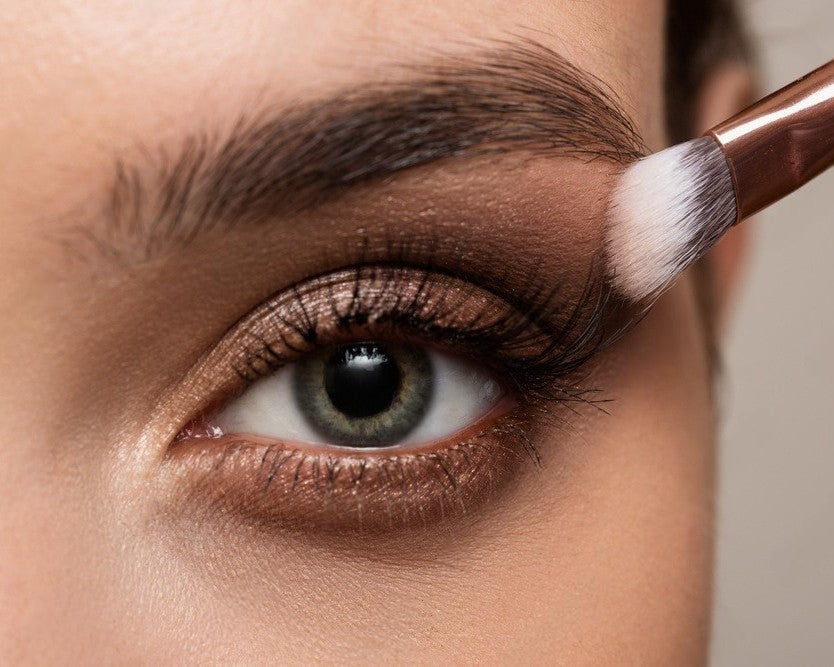
The skin around your eyes is the thinnest on your entire face, which makes it the first area to show dehydration, fatigue, and the early signs of aging. A dedicated eye cream applied every morning addresses three of the most common concerns: puffiness from overnight fluid retention, dark circles, and fine lines around the outer corners.
For morning use, look for formulas that contain caffeine (which constricts blood vessels and visibly reduces puffiness), vitamin K or niacinamide (which help brighten discoloration), or peptides (which support skin firmness over time).
Apply using your ring finger — it naturally applies the least pressure of any finger — using gentle patting motions from the inner corner of the eye outward. Never pull or drag the skin. A pea-sized amount is more than enough for both eyes.
Apply eye cream before your moisturizer so it can absorb properly into the delicate periorbital area without being diluted or displaced by heavier products layered over it.
Step 5: Moisturizer (Lock Everything In)
Even if you have oily skin, a moisturizer is non-negotiable in the morning. Skipping it sends a signal to your skin to overproduce sebum to compensate for lost moisture — producing the exact opposite of what you want.
The key is finding the right formula for your skin type. Oily and combination skin generally does best with a lightweight, oil-free gel or lotion — something with hyaluronic acid and niacinamide that hydrates without clogging pores. Dry and normal skin types tend to benefit from a slightly richer cream with ceramides, squalane, or shea butter for longer-lasting comfort throughout the day.
Apply your moisturizer in gentle upward, outward strokes — and don't forget your neck. It's essentially an extension of your face and ages just as visibly, yet it's skipped in most people's routines.
Step 6: SPF (The Single Most Important Step You Can Take for Your Skin)
If you only do one thing after cleansing your face in the morning, make it this. Sunscreen is the undisputed gold standard of anti-aging, hyperpigmentation prevention, and long-term skin health — and yet research consistently shows that most people either skip it entirely, under-apply it, or mistakenly rely on the SPF listed in their foundation or powder (which rarely provides adequate protection on its own, because we don't apply nearly enough product).
Use a dedicated sunscreen with at least SPF 30, and ideally SPF 50. Apply it as the very last step in your skincare routine, after your moisturizer and before any makeup. You need approximately a quarter teaspoon for your face alone to achieve the protection level shown on the label.
Mineral vs. chemical sunscreen is a real consideration. Mineral formulas — those using zinc oxide or titanium dioxide — sit on the surface of the skin and physically deflect UV rays. They're ideal for sensitive or acne-prone skin because they rarely cause irritation. Chemical formulas absorb UV energy and convert it to heat before it can penetrate the skin — they tend to be lighter in texture and more cosmetically elegant, making them easier to wear daily and under makeup. Both protect effectively; the best sunscreen is the one you will actually apply every single day.
One final point worth repeating: clouds do not block UV rays. Windows do not block UVA. Reapply every two hours if you're spending time outdoors or near windows.
Bonus Step: Lip Balm with SPF
Your lips have virtually no melanin and almost no built-in protection against UV radiation, yet they are one of the most consistently neglected areas in sun protection. Finish your morning routine with a nourishing lip balm containing at least SPF 15. It takes three seconds to apply and makes a meaningful difference in preventing the vertical lines, volume loss, and dryness that UV exposure accelerates around the mouth over time.
The Full Morning Routine at a Glance
To recap the optimal layering order: begin with a gentle cleanser or lukewarm water, follow with a hydrating toner, apply your vitamin C serum, add your eye cream, follow with your moisturizer, seal everything in with SPF 30 or higher, and finish with a lip balm with SPF. Each product gets a brief moment to absorb before the next layer goes on.
Done properly, this entire routine takes between five and ten minutes. That is one of the highest-return investments you can make for your skin's long-term health and appearance.
Common Morning Routine Mistakes to Avoid
Several habits quietly undermine even a perfectly chosen product lineup. Using an exfoliating toner in the morning increases photosensitivity and erodes your barrier right before your skin faces the day — save those for evening. Applying SPF and then touching your face frequently — or pressing your phone against it — breaks down your sun protection faster than most people realize. Layering too many actives at once, such as vitamin C plus exfoliating acids plus retinol, triggers irritation that paradoxically slows your progress.
And don't overlook product order. Apply from thinnest to thickest consistency, and always end with SPF as the final seal. Even a single product applied out of sequence can compromise absorption and reduce the effectiveness of everything around it.
Frequently Asked Questions
Can I use retinol in the morning? Retinol is best saved for your nighttime routine. It degrades in direct sunlight and meaningfully increases your skin's photosensitivity. Vitamin C is your antioxidant counterpart designed for the AM.
Do I need to wait between products? Generally, 30 to 60 seconds between steps is sufficient. For your vitamin C serum specifically, giving it a full 60 to 90 seconds before applying moisturizer improves both absorption and effectiveness.
My SPF leaves a white cast — what can I do? Try a chemical sunscreen formula, or look for a newer generation mineral formula using micronized zinc oxide, which is far less likely to leave visible white residue. Tinted SPF options are an excellent solution for most skin tones and simultaneously help even out your complexion.
Your morning routine is the foundation of everything your skin will look and feel like for years to come. Start with one or two key upgrades — a quality vitamin C serum and a dedicated SPF — and build from there. Your future skin will absolutely notice the difference.
Ready to build your perfect morning lineup? [Shop the Everbeaut skincare collection →]

Written by Jake Mitzkovitz