How to Find Your Perfect Perfume: The 2026 Fragrance Buying Guide for Scents That Last All Day
How to Find Your Perfect Perfume: The 2026 Fragrance Buying Guide for Scents That Last All Day
There is a version of this story almost everyone has lived. You spray a perfume at a department store counter, it smells incredible, you buy the bottle — and then you get home, wear it for a few hours, and realize it smells nothing like what you fell in love with. Or it disappears by noon. Or it's somehow completely different on your skin than it was on that little paper strip.
Fragrance shopping is uniquely confusing because perfume is one of the only beauty products where chemistry, biology, memory, and personal identity are all involved in a single purchase decision. Getting it right is not about luck. It is about knowing what you are actually choosing between.
This guide covers everything you need to walk into any fragrance purchase — online or in-store — with confidence. By the end, you will understand why perfumes smell different on different people, how to actually test a scent properly, what the concentration tiers mean for your money, and how to build a fragrance collection (or a single signature scent) that genuinely fits your life.
Why Perfume Smells Different on Everyone
This is the first thing to understand, because it removes a lot of the frustration from fragrance shopping. Perfume does not smell the same on every person. It reacts with your individual skin chemistry — your natural pH, the oils your skin produces, your diet, even your body temperature — to produce a slightly different result on every wearer.
This is why a perfume that smells ethereal on your friend can smell completely flat or even off-putting on you. It is not a flaw in the formula. It is just skin chemistry, and it is the core reason why testing fragrance on your own skin — not on a paper strip, not on someone else's wrist — is the only way to truly know if a perfume is right for you.
This also explains why finding your signature scent can take time and experimentation. The goal is to find a fragrance whose chemistry harmonizes with yours in a way that feels like it was made for you. When it happens, you will know immediately.
Understanding Fragrance Concentrations
One of the most confusing parts of shopping for perfume is the terminology on the label. "Eau de Toilette," "Eau de Parfum," "Parfum" — these are not just marketing names. They describe fundamentally different products that will behave differently on your skin and on your wallet.
Parfum (also called Extrait de Parfum) is the most concentrated form of fragrance, typically containing 20–40% aromatic compounds. A small amount goes a long way, it lasts significantly longer on skin — often eight to twelve hours or more — and tends to be the most expensive option per ounce. If you find a scent you love and want it to last all day from a single application, Parfum is the format to reach for.
Eau de Parfum (EDP) contains roughly 15–20% fragrance concentration, making it the most popular premium format. It typically lasts six to eight hours, projects well, and strikes the best balance between longevity, projection, and price. Most of the luxury and prestige fragrances you see in beauty retailers are in EDP format for this reason.
Eau de Toilette (EDT) runs at about 8–15% concentration. It is lighter, often brighter and more citrusy in character, and typically lasts three to five hours. EDT is ideal for daytime, warmer weather, or casual wear where you want something that feels fresh rather than rich and lingering. It is also generally more affordable than the EDP version of the same fragrance.
Eau de Cologne (EDC) is the lightest format at 2–5% concentration. True cologne is designed to be refreshing rather than long-lasting, and it is often applied more generously and re-applied throughout the day. Many citrus-forward and aquatic men's fragrances are in this format.
The practical upshot: if longevity is your main concern, go EDP or Parfum. If you want something lighter for warm weather or office wear, EDT is often the better fit.
The Fragrance Pyramid: How a Scent Unfolds Over Time
Every well-designed fragrance is built in three layers, known as the fragrance pyramid. Understanding these layers is what separates people who know what they smell when they put on a perfume from people who are just reacting to a general impression.
Top notes are what you smell in the first five to fifteen minutes of wearing a fragrance. They are typically the brightest, lightest ingredients — citrus, green, herbal, or aquatic accords — specifically chosen to create an immediate, appealing first impression. Top notes are also the most volatile, meaning they evaporate fastest. This is critically important: the perfume you smell in the bottle or on a spray card is almost entirely top notes. It is not what you will be wearing for the rest of the day.
Heart notes (or middle notes) emerge as the top notes fade, typically twenty minutes to an hour into wear. They form the true character of the fragrance — florals, spices, fruits, and rich aromatics. The heart notes are what you are actually committing to when you buy a perfume, so this is the stage at which you should make your decision.
Base notes are the deep, long-lasting foundation of the scent. Musk, woods, amber, vanilla, resins, and animalic accords live here. They develop over one to two hours and are what lingers on your skin and clothing at the end of the day. Base notes are also what make a fragrance feel either warm and sensual or clean and airy overall.
The practical implication of all this: never buy a perfume based on the first five minutes. Spray it on your wrist, walk away, do other shopping, have a coffee, and come back to your wrist thirty to forty-five minutes later. What you smell then is what you are actually buying.
The Major Scent Families: Finding What Suits You
Fragrance is categorized into broad olfactory families, and knowing which families you gravitate toward makes shopping dramatically easier. Most people discover they have one or two families they reliably love and several they do not connect with at all.
Floral is the largest fragrance family and spans everything from soft, powdery rose and jasmine to bright peony, crisp magnolia, and heady tuberose. It is universally feminine in its classic forms, but modern floral fragrances range from barely-there freshness to deep, intoxicating richness.
Oriental (or Amber) fragrances are warm, opulent, and sensual — built around vanilla, amber, resins, incense, and spices. These are the fragrances that linger in a room after you leave, that feel genuinely luxurious on cold-weather skin, and that create an unmistakable impression. Think of these as evening and autumn fragrances, though rules exist to be broken.
Woody scents center on sandalwood, cedarwood, vetiver, patchouli, and oud. They can be earthy and grounded, sleek and sophisticated, or smoky and dramatic depending on what surrounds them in the formula. Woody fragrances read as both masculine and feminine and are among the most versatile for daily wear.
Fresh fragrances — including aquatics, citrus, and greens — are the lightest and most universally wearable. They evoke clean laundry, sea breeze, freshly cut grass, grapefruit, and green tea. If you find heavy fragrances overwhelming or you want something universally office-appropriate, fresh scents are your best starting point.
Gourmand fragrances smell edible — like caramel, chocolate, coffee, almond, or warm vanilla pastry. They have gained enormous popularity over the last decade and tend to be deeply personal and cozy rather than sophisticated in the traditional sense. People either love them immediately or find them too sweet.
Chypre fragrances — built on the classic accord of bergamot, labdanum, and oakmoss — are among the most complex and historically significant in perfumery. They feel green, mossy, and refined and tend to attract people who are drawn to fragrances that feel genuinely grown-up and interesting rather than immediately crowd-pleasing.
How to Actually Test a Perfume (The Right Way)
Testing is where most people's fragrance shopping goes wrong. Here is the correct approach:
Test no more than three fragrances in a single shopping session. Your nose adapts quickly and loses the ability to distinguish accurately after a few scents. Three is the maximum; two is better.
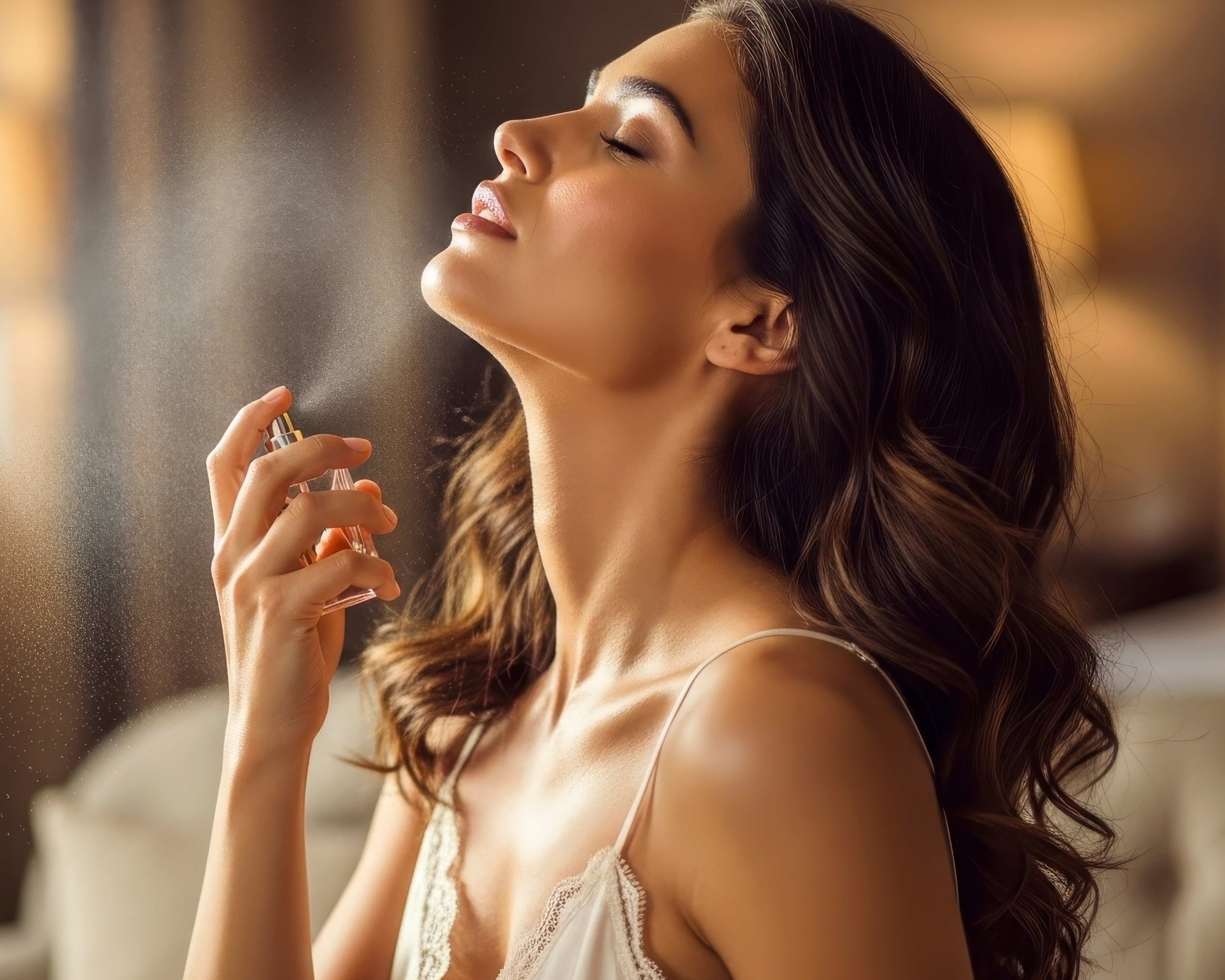
Apply directly to warm pulse points on your skin — wrist, inner elbow, or the base of your throat — not the back of your hand. Pulse points emit heat, which activates and amplifies the fragrance. Do not rub your wrists together after spraying; this breaks down the top notes and distorts what you smell.
Give it time. As explained above, the thirty-to-forty-five-minute mark is when you should evaluate. If you need to reset your nose between scents, smell the inside of your elbow or sniff coffee beans, which is the classic palate cleanser of the fragrance counter.
If you are shopping online, many retailers and fragrance discovery services offer sample sets or discovery kits that allow you to test multiple fragrances over multiple days before committing to a full bottle. This is genuinely the best way to find your fragrance online — the small investment in samples usually saves far more in returned or regretted full-bottle purchases.
How to Make Fragrance Last Longer All Day
Longevity comes down to application technique as much as the fragrance itself. These are the habits that significantly extend how long your scent stays on your skin.
Moisturize before spraying. Fragrance clings to hydrated, oily skin dramatically better than dry skin. Apply an unscented lotion or body oil to pulse points first and let it absorb, then layer your fragrance on top. The difference in longevity is substantial.
Apply to warm pulse points — wrist, neck, behind the knees, inner elbows — rather than clothing. Skin radiates heat and diffuses the scent continuously throughout the day. Clothing application makes a fragrance smell static and can stain delicate fabrics.
Do not over-spray in a panic about longevity. Two to four sprays is appropriate for most Eau de Parfums. More sprays do not make a fragrance last longer — they just make the opening stage more overwhelming.
Consider layering your fragrance with a matching body wash or lotion from the same collection if one is available. Fragrance layering — using the same scent across multiple product types — creates a more immersive, longer-lasting scent experience than a single application of the perfume alone.
Store fragrance away from light and heat. Sunlight and warmth degrade fragrance molecules over time, which is why perfume stored in a bathroom (steam, heat, humidity) or on a sunny windowsill loses its integrity much faster than perfume stored in a cool, dark drawer or closet.
Building a Fragrance Wardrobe vs. Finding One Signature Scent
There is no right answer here — this is genuinely a matter of personality. Some people build an entire fragrance wardrobe: a fresh, light scent for the office; something richer and more complex for evenings; a warm, intimate fragrance for weekends. Others find a single scent that feels completely like them and wear it exclusively for years until it becomes inseparable from their identity in other people's minds.
If you are building a wardrobe, think about rotating by season (fresh florals and greens in spring and summer, orientals and woods in autumn and winter) and by occasion (light and clean for daytime, rich and sensual for evenings).
If you are searching for a signature, the clearest sign you have found it is that you feel incomplete or underdressed without it. That instinct is the one to follow.
Fragrance as a Gift: How to Get It Right
Fragrance is one of the most beloved beauty gifts — and one of the trickiest to buy for someone else, precisely because it is so personal. The safest strategy is to either shop for someone whose scent preferences you know well (if they always wear something warm and woody, stay in that family), invest in a discovery kit or fragrance sample set that lets them explore multiple options and choose for themselves, or buy from a house whose aesthetic matches the recipient's personality.
At Everbeaut, our fragrance collection spans the major scent families — from fresh and floral to warm and woody — so whether you are treating yourself or shopping for someone you love, you can explore your options in one place. Every scent on the site includes family and note descriptions to help you shop with confidence.
The Bottom Line
The best perfume in the world is the one that smells like the best version of you. It is not the most expensive, the most hyped, or the most universally praised. It is the one you reach for every single morning without thinking about it.
Getting there requires understanding what you are actually smelling, giving fragrances enough time to develop on your skin, and being willing to trust your own instinct over trends. You know what you love. This guide gives you the language and the process to find it.
Ready to find your scent? Explore Everbeaut's fragrance collection — shop by family, occasion, and concentration to discover the perfume or cologne that fits your life.

Written by Jake Mitzkovitz