The Perfect 2026 Nighttime Skincare Routine: How to Repair, Restore & Wake Up Glowing
The Perfect 2026 Nighttime Skincare Routine: How to Repair, Restore & Wake Up Glowing
There is a reason dermatologists refer to the hours you sleep as the golden window of skincare — and it's not marketing language. When you sleep, your skin's cell turnover rate increases significantly, transepidermal water loss goes up (meaning skin is uniquely receptive to moisture and active ingredients), cortisol levels drop so inflammatory stress diminishes, and the repair mechanisms your skin runs all day shift fully into regeneration mode. The products you apply before bed work harder and absorb more deeply than virtually anything you do to your skin during waking hours.
But most people either skip their nighttime routine entirely, keep it too minimal to see meaningful results, or make critical errors — applying retinol without a moisturizer to buffer it, layering actives that counteract each other, or going to bed with residual SPF still on their face. This complete 2026 nighttime skincare guide walks you through every step in exactly the right order, with the exact reasoning behind each one, so that every morning you wake up with skin that looks more rested, more luminous, and more repaired than the night before.
Why Your Skin Repairs Itself Best While You Sleep
Your skin operates on a circadian rhythm just as your sleep cycle does. Research consistently shows that skin cell mitosis — the generation of new cells — peaks between 11 p.m. and midnight, making those hours prime time for the repair processes your skin runs continuously. During sleep, the skin also produces elevated levels of collagen, growth hormones, and repair enzymes, and its daytime protective mode — which diverts energy toward defending against UV, pollution, and external stressors — shifts fully toward internal regeneration.
There is also a critically practical advantage to nighttime skincare: nothing interferes with it. Active ingredients like retinol and chemical exfoliants are destabilized by UV light, so the evening is actually the scientifically correct time to use them. You're not sweating products off, rubbing them onto a mask, or exposing them to environmental degradation. Your nighttime routine gets eight completely uninterrupted hours of absorption, and a well-designed routine takes full advantage of that window.
The Complete 2026 Nighttime Skincare Routine, Step by Step
Step 1: First Cleanse — Remove Everything Sitting on the Surface
The purpose of your first cleanse is singular and non-negotiable: to dissolve and lift the layer of makeup, sunscreen, excess sebum, and environmental pollutants that have accumulated on your skin all day. A water-based cleanser cannot fully accomplish this on its own — oil-based debris like SPF and foundation requires an oil-based first cleanser to break it down. Use a cleansing oil, cleansing balm, or micellar oil as your absolute first step, massaging it gently into dry skin for at least a full 60 seconds before rinsing thoroughly with lukewarm water.
Going to bed with residual sunscreen on your skin is one of the most underappreciated causes of clogged pores, congested texture, and persistent breakouts — issues that many people spend months trying to fix with actives when the real solution is simply cleansing properly in the first place.
Step 2: Second Cleanse — A Genuinely Clean Skin Surface
Following your oil-based first cleanse, your second cleanse uses a gentle water-based formula to remove any remaining residue and bring your skin to a truly clean, balanced starting point. The right second cleanser depends entirely on your skin type: a foaming or gel formula for oily and acne-prone skin, a cream or milk cleanser for dry or sensitive skin, and a light gel for combination skin. The emphasis at this step is on gentle — a cleanser that strips your natural oils disrupts the skin barrier and makes every product you apply afterward less effective, which is the opposite of what a good nighttime routine is designed to do.
Step 3: Toner or Essence — Hydrate and Prepare the Skin for Actives
A toner or essence applied immediately after cleansing accomplishes two things simultaneously: it restores your skin's pH level, which can be slightly disrupted even by the gentlest cleansing, and it delivers an initial wave of hydration that primes skin to receive the active ingredients coming next. Patting a hydrating toner or essence into the skin with clean hands — rather than wiping with a cotton pad, which can be unnecessarily rough — is the most effective application method. Look for formulas containing hyaluronic acid, niacinamide, centella asiatica, or fermented ingredients. Avoid toners with alcohol as a primary ingredient, especially if you're applying actives afterward, as alcohol can increase sensitivity and reduce skin's receptiveness to treatment products.
Step 4: Targeted Treatment — The Step That Drives Real, Visible Change
Your targeted treatment is the most consequential step in your nighttime routine, and it's the one responsible for long-term skin transformation. It's applied after toner on skin that's slightly damp rather than fully dry, as a degree of residual moisture helps actives absorb more effectively. In 2026, the most well-researched and results-proven nighttime active ingredients are:
Retinol and retinoids remain the undisputed gold standard for addressing fine lines, uneven texture, enlarged pores, skin laxity, and overall tone. If you're new to retinol, begin with a concentration between 0.025% and 0.1% applied only two nights per week, and increase the frequency gradually over six to eight weeks as your skin adapts. Always follow retinol with your moisturizer — the "sandwich method" of applying a thin layer of moisturizer both before and after retinol is the most effective approach for minimizing initial dryness and irritation without reducing efficacy.
AHAs including glycolic acid and lactic acid improve texture and tone by dissolving the bonds between accumulated dead cells, revealing smoother, more even skin beneath. Use these two to three nights per week, and alternate them with your retinol nights rather than applying them on the same night.
BHAs like salicylic acid are the best choice for oily or acne-prone skin, as their oil-soluble structure allows them to penetrate into pores and clear out the debris that causes congestion, closed comedones, and breakouts.
Niacinamide is uniquely compatible with every other active on this list, can be used every single night without issue, and simultaneously addresses hyperpigmentation, redness, enlarged pores, and uneven tone — making it the most versatile nighttime ingredient currently available.
Peptides and growth factors are the ideal nightly treatment for anyone focused primarily on skin firmness and anti-aging, working synergistically with retinol and requiring no special rotation schedule.
The most common mistake at this step is using too many actives simultaneously, which overwhelms the skin barrier faster than it can repair itself. A sustainable rotation looks like this: retinol two to three nights per week, AHAs on two alternating nights, and niacinamide every night as a calming, tone-evening base layer.
Step 5: Eye Cream — Every Single Night Without Exception
The skin around your eyes is the thinnest on your entire face, contains almost no sebaceous glands, and is the first area to show dehydration, fine lines, and fatigue. Applying an eye cream every night — regardless of your age or skin concern — is one of the highest-return habits in any skincare routine. Use your ring finger (the one that naturally applies the least pressure) to dot a small amount around the orbital bone, the bony ring surrounding your eye socket, and tap gently rather than rubbing. At night, look for eye creams containing retinol or peptides for firmness, hyaluronic acid and ceramides for plumping hydration, or caffeine for its depuffing and circulation-stimulating effects.
Step 6: Serum — Targeted Hydration and Cellular Repair
If a dedicated serum is part of your routine, it sits after your treatment product and before your moisturizer. At night, the most effective serum choices are hyaluronic acid for deep hydration and surface plumping, peptide serums for collagen stimulation and barrier repair, and ferment-based or probiotic serums for overnight cellular renewal. Vitamin C, most commonly associated with morning routines, can also be applied at night for people who prefer to reserve their morning products for SPF and a lighter base — it delivers equivalent brightening benefits regardless of the time of application.
Step 7: Night Cream or Moisturizer — Rich, Repairing, and Occlusive
Your nighttime moisturizer should be noticeably richer than your daytime formula, since you have no SPF constraints and your skin's elevated overnight moisture receptivity means it can fully absorb a denser, more nourishing product during sleep. For oily and combination skin, a gel-cream with hyaluronic acid and niacinamide delivers adequate hydration without heaviness. For normal to dry skin, a cream with shea butter, ceramides, squalane, and peptides is the ideal choice. For very dry or barrier-compromised skin, a rich recovery balm or dedicated barrier-repair cream will produce the most significant overnight improvement.
One important clarification for anyone worried about diluting their actives: applying moisturizer over treatment products does not reduce their efficacy. It actually helps actives like retinol absorb more gradually, which reduces irritation while delivering equivalent results over time.
Step 8: Facial Oil or Sleeping Mask — Optional, but Noticeably Powerful
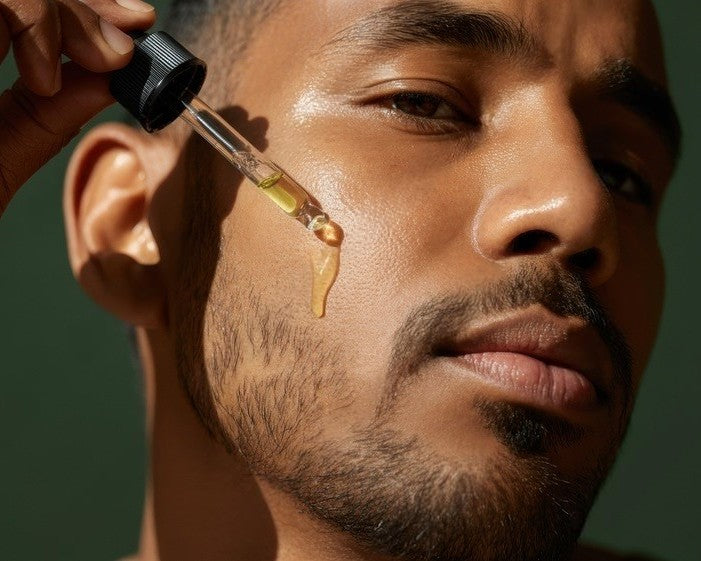
Finishing your routine with a facial oil or sleeping mask creates an occlusive seal over everything beneath it, holding moisture and active ingredients against your skin for the full duration of your sleep. Facial oils applied over moisturizer are especially effective for dry and mature skin, with rosehip, marula, and squalane-based oils among the best-researched for overnight skin improvement. Sleeping masks — typically gel-texture formulas packed with hyaluronic acid, ceramides, or brightening actives — are ideal for anyone who wants to wake up with noticeably more hydrated, plumped, and luminous skin. Using a sleeping mask two to three nights per week rather than every night gives your skin the benefit without increasing the risk of congestion.
The Most Common Nighttime Skincare Mistakes to Avoid in 2026
Skipping the first cleanse is the single most damaging routine mistake most people make, because no active ingredient performs effectively through a layer of SPF residue and environmental debris — no matter how expensive or well-formulated it is.
Using retinol without following it with moisturizer causes avoidable irritation, flaking, and barrier damage, particularly in the first four to six weeks of use. Moisturizer after retinol is not optional.
Layering conflicting actives — vitamin C alongside benzoyl peroxide, or strong glycolic acid on the same night as a high-strength retinol — destabilizes the active ingredients and frequently causes significant skin irritation without delivering better results. Rotation is always more effective than stacking.
Applying each product too quickly without allowing 30 to 60 seconds of absorption time means layers sit on top of each other rather than penetrating properly, which dramatically reduces the efficacy of everything in your routine.
Stopping at the jawline leaves your neck and décolletage — two of the most age-prone, frequently sun-exposed areas on your body — completely untreated. Whatever you apply to your face should be extended down the neck and chest as a non-negotiable final step.
Your Nighttime Routine by Skin Type
For oily and acne-prone skin, build your routine around a foaming cleanser for both cleanse steps, a niacinamide toner, a salicylic acid or retinol treatment on alternating nights, a lightweight gel moisturizer, and an eye cream every night.
For dry and sensitive skin, use a gentle cream or milk cleanser for both cleanse steps, a hydrating essence with centella or ferments, a low-dose retinol or peptide treatment, a rich night cream, and a facial oil sealed over the top to prevent overnight moisture loss.
For combination skin, a gel cleanser, hydrating toner, rotating treatment schedule (niacinamide every night, retinol two nights, AHA two nights), and a gel-cream moisturizer addresses both the drier and oilier zones without overwhelming either.
For mature skin, prioritize peptides, retinoids, ceramides, and rich occlusive moisturizers above all else, and consider adding a sleeping mask two to three nights per week. The most meaningful improvements in fine lines, firmness, and overall radiance come from months of consistent execution rather than any single product.
How to Build a Nighttime Routine You'll Actually Do Every Night
The best nighttime skincare routine is not the one with the most steps — it's the one you actually execute consistently, every single evening. If eight steps feels overwhelming right now, begin with three: double cleanse, a niacinamide or hyaluronic acid serum, and a moisturizer. That foundation alone will produce a visible improvement in skin texture and hydration within three to four weeks. Once those three steps feel completely automatic, add retinol two nights per week. Then an eye cream. Build gradually, and by the end of 2026 you'll have a full, effective nighttime routine that runs on habit rather than effort.
Your skin works incredibly hard overnight — the right products make sure it has everything it needs to do that work as effectively as possible. Shop Everbeaut's complete skincare collection for the expert-selected products that support every step of the 2026 nighttime routine above.

Written by Jake Mitzkovitz